
Customer impact in context
Bring the affected service and customer scope into the response. Related cases or complaints can provide context without becoming the incident.
Operational incident management
When service fails, operations and customer service need a shared picture. Coordinate the event, affected customers and response decisions so handlers can communicate with context.
Confirm the event, affected service and customer impact.
Give the response an owner and align contributors.
Keep response decisions and customer updates in context.
Validate the outcome and assign follow-up work.
Customer-impact response
ResolveCX incident management software provides AI-Powered Resolution Governance alongside existing CX and service management systems. A governed record connects the operational event, customer impact, response history and accountable owners to related case work.
Give customer-facing teams a consistent basis for updates while operations coordinates the response. ResolveCX is not an enterprise ITSM replacement; monitoring, developer on-call, security response and safety reporting remain specialist processes.
Read the incident management definition guideOne accountable flow
An illustrative six-stage response: assess customer impact, assign ownership, coordinate containment, validate restoration and review what follows.
Illustrative workflow incident
Contain the event, then review the response
Capture the first signal from a person or service team.
Illustrative sequence, not a product screen or an automatic action. Controls depend on your agreed workflow.
Select a stage to inspect its owner, evidence and next action. All stage summaries remain visible.
Capture the first signal from a person or service team.
Confirm the affected service, customer scope and operational significance.
Give one person accountability while the right contributors coordinate the work.
Record immediate actions, dependencies, approvals and the decision behind them.
Validate restoration, communicate the outcome and close against agreed criteria.
Turn the verified chronology into actions, learning and related problem work.
Built for accountable response
Keep teams aligned on what is known, who acts next and what customers can be told. Confirm communication responsibilities and data flows for your workflow.
Bring the affected service and customer scope into the response. Related cases or complaints can provide context without becoming the incident.
Make the owner and next action clear as service teams coordinate. Keep material decisions attributable to people, not an assumed automatic response.
Work from the original signal through actions, communications, validation and follow-up so reviewers can distinguish facts from open questions.
A focused fit
An interrupted service may affect many customers. Coordinate the event without losing each customer's case owner, communication needs or individual outcome.
An interrupted fulfillment, approval or service process with a named owner.
A service interruption affecting a defined customer group and communication plan.
A high-impact event needing coordinated leadership, updates and review.
A complaint or case can provide context without becoming the incident itself.
The record after the response
Review the verified timeline, customer impact and communications, then assign follow-up work. Separate facts from open hypotheses and consider related problem investigation when events recur.
Agree measures for response timeliness, update consistency and repeat contacts. These help evaluate the operating process; they are not promised ResolveCX results.
Illustrative incident response. Ownership, communication and validation criteria depend on your configuration.
People name an owner at each handoff, preserve material decision context and agree what follows closure. Monitoring and recovery remain with specialist systems and teams.
ResolveCX AI
For incidents affecting customers, AI can assist with the related case work where configured. These are not automated incident findings or root-cause decisions. A person verifies source records, impact and the next action.
Brief a receiving handler on a related customer case during a service-event handoff. Check the summary against the case record.
Surface relevant approved guidance for handlers responding to affected customers. The handler reviews what applies before communicating.
For inbound contacts about customer impact, sentiment may suggest a handling path. A person confirms the impact and escalation criteria.
Connected customer operations
Incident work rarely stands alone. Follow the records that bring customer context, escalation authority and longer-term learning into view.
Buyer questions
It provides a controlled record for operational failures, their customer impact, accountable response and review. ResolveCX is intended for regulated service operations, not a replacement for technical monitoring or safety reporting.
Operational process failures and customer-impact service failures are the primary scope. A widespread or repeated event may need coordinated review. IT outages are relevant when they affect service delivery, but security response and workplace safety require separate specialist processes.
ResolveCX focuses on the operational event, affected customers, communications and related case work alongside your existing service management systems. It is not an enterprise ITSM replacement and does not promise a configuration database, on-call paging or observability stack.
Incident-specific AI triage is not assumed. Related case summarization and knowledge support may help a handler where configured; a person checks the source and owns the decision. Ask for a demonstration of the available controls for your workflow.
Record the verified timeline, scope of impact, actions, communications, contributing factors, open hypotheses and corrective actions. Assign each action an owner, due date and verification method; do not treat closure of the immediate incident as proof that the cause is fixed.
Timing depends on process mapping, permissions, data migration, integrations, testing and training. Start with a representative incident, agree acceptance criteria, then phase configuration and rollout. Request a scoped delivery plan rather than assuming a fixed launch period.
Next step
Bring one service event and the customer cases it affected. Explore response ownership, communication context and follow-up alongside your current systems.
Book an incident workflow demoKeep exploring
Relevant guides and real-world perspectives for the work you are doing now.
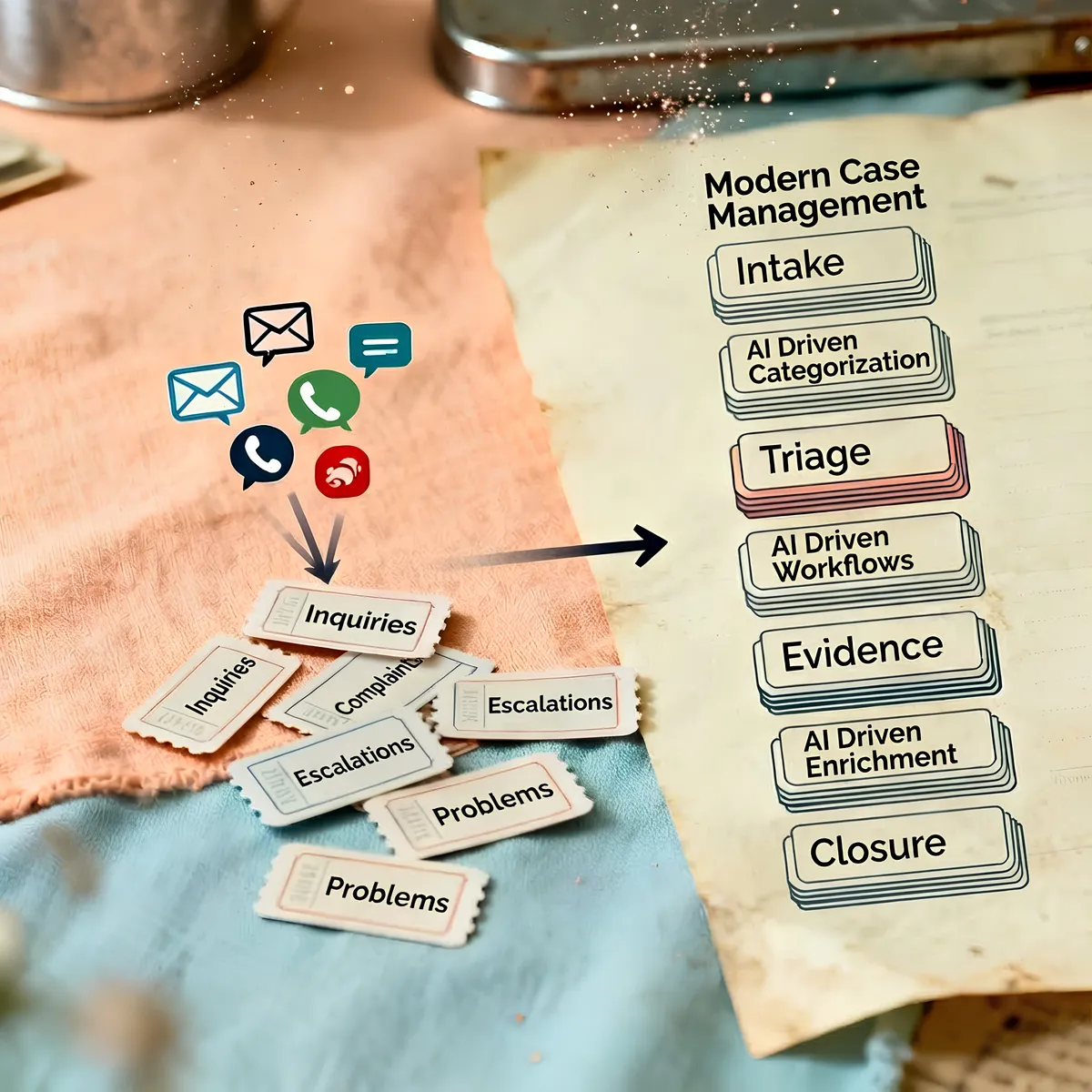 Guide
GuideHow organizations identify, log, investigate, and resolve incidents, whether clinical safety events, security incidents, or operational failures. The structured approach versus ad hoc reporting.
Explore resource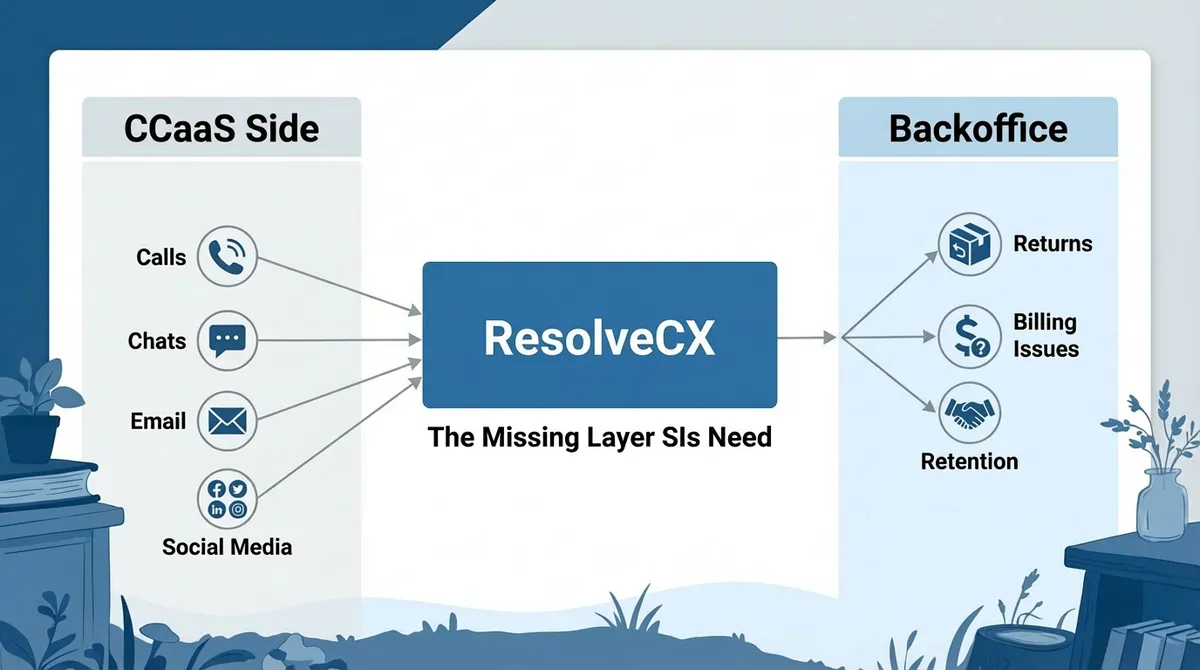 Guide
GuideThe discipline of investigating root causes behind recurring incidents and complaints, not just closing the surface issue. How structured problem management eliminates the failures that generate repeat harm.
Explore resourceGuideCQC Duty of Candour, PSIRF-aligned investigation workflows, CQC notification tracking, and multi-site safety governance, for NHS Trusts and registered healthcare providers.
Explore resourceGuideHIPAA Security Rule incident response procedures, 60-day breach notification deadline tracking, OCR audit readiness, and 6-year record retention, for US covered entities and business associates.
Explore resource Blog
BlogPractical thinking on complaint governance, escalation management, and case resolution for regulated industries.
Explore article Video
VideoSee complaint governance, case management, and escalation workflows explained by the ResolveCX team.
Explore videoCase studySee how regulated healthcare teams improved SLA adherence, reduced escalations, and accelerated audit preparation.
Explore resourceFollow the latest ResolveCX updates, governance conversations, and practical customer operations insights.
Explore resource