
Scattered complaint records
Inbox trails and spreadsheets leave investigators reconstructing what the customer reported.
AI-assisted complaint operations
When formal dissatisfaction sits in inboxes and spreadsheets, ownership and deadlines become hard to follow. ResolveCX complaint management software connects the complaint, investigation and response so teams can capture, investigate and resolve customer complaints with accountability.
Record the reported issue and available source context.
Review evidence, contacts and the complaint chronology.
Keep the response and approved outcome with the record.
Review recurring themes for accountable follow-up.
Formal dissatisfaction needs more than a logged ticket. Give the customer a responsible person and give that person the context to act.
Inbox trails and spreadsheets leave investigators reconstructing what the customer reported.
Without a responsible handler, the next action waits and customers chase an update.
Unclear service commitments make time-sensitive complaints harder to prioritize.
Closing individual complaints without reviewing themes leaves improvement work unowned.
ResolveCX provides AI-Powered Resolution Governance alongside your existing CX and service systems. Keep formal dissatisfaction, ownership and decisions in a complaint workflow, rather than asking teams to replace their entire stack.
A shared chronology gives investigators context, handlers a basis for customer updates and leads visibility into outstanding decisions. Agree the supported sources and configured controls during discovery.
Read the complaint management resourceIllustrative complaint workflow. Handler roles, service commitments and review steps depend on your configuration.
Complaint management software keeps the next decision visible. Your policy defines the stages and commitments.
Illustrative workflow complaint
The response follows the investigation
Record the issue and confirm the next customer contact.
Illustrative sequence, not a product screen or an automatic action. Controls depend on your agreed workflow.
Select a stage to inspect its owner, evidence and next action. All stage summaries remain visible.
Record the issue and confirm the next customer contact.
Review category and urgency before confirming a route.
Check applicable policy and agree the service target.
Review contacts and supporting material before proposing a finding.
An authorized reviewer checks the decision and escalation.
Record the customer response and approved outcome.
Review recurring themes and assign follow-up work.
Use complaint management software to make handoffs reviewable, decisions understandable and improvement work accountable.
Keep the complaint and available source context together. Reviewed classification and priority help the receiving team understand what needs attention.
Make the handler and next decision visible through handoffs. Leads can direct attention to stalled work without relying on an inbox chase.
Map service commitments and escalation points to your approved process. Teams can review what is due and raise exceptions; configured targets do not guarantee legal compliance.
Keep contacts, supporting material and decisions in context. Reviewers can distinguish the allegation from evidence and a proposed finding.
Connect the customer response to a reviewed decision and recorded outcome. A responsible person checks material findings rather than closing on status alone.
Use configured reporting to review repeated dissatisfaction. Decide whether a separate problem investigation is needed and what follow-up should be assigned.
ResolveCX AI
Where configured, suggestions support triage and review. People check source context and own findings, responses and closure. AI does not establish causation or make regulatory decisions.
Suggest a complaint category for triage. The handler checks it against the reported issue and approved policy before confirming a route.
Flag customer emotion as context for a possible specialist handoff. A person reviews the signal and the agreed escalation criteria.
Prepare a briefing when complaint work passes to another handler. The receiving team verifies the draft against the case record.
A complaint may need specialist case work, an urgent escalation or investigation of a recurring cause. Keep those purposes distinct and agree the record relationships for your operation.
Coordinate complex, persistent customer work and its contributors.
Explore case managementHandle an operational event and its immediate service impact.
Explore incident managementRoute a complaint needing higher authority, expertise or urgency.
Explore escalation managementInvestigate repeated or systemic issues beyond an individual complaint.
Explore problem managementIllustrative industry situations, not regulatory approval. Validate your policies and local requirements.
Coordinate a disputed service decision with a handler, evidence and policy review.
See the industry contextReview an unresolved service complaint alongside contact history and possible incident work.
See the industry contextCoordinate investigation and response to a sensitive service concern under your access requirements.
See the industry contextBring one representative complaint to a product discussion. Ask the team to show:
Ownership and deadlines against your policy.
Evidence, review and the customer response.
Reporting, connected sources and delivery scope.
Review pricing scope and website privacy. Request product security documentation separately.
It gives service teams a governed workflow to capture, investigate and resolve formal customer dissatisfaction. Ownership, evidence, deadlines and responses stay in context, with people responsible for material findings and outcomes.
The reported issue, available source context, owner, chronology and outcome stay together. Handlers review classification, investigators assess evidence and an authorized person checks material decisions. Confirm fields and workflow rules in a demo.
Evaluate supported digital intake and agent-created records against your sources. Channel coverage depends on the agreed product and integration scope; email, phone, chat, social, portal and API support are not assumed in every configuration.
A chronology supports investigation and review. Configured service commitments and escalation points reflect your policy, not a legal guarantee. Agree approval rules and exception handling for your operation.
These are related but distinct workflows: complex customer work, operational events, higher-level decisions and recurrence investigation. Confirm record relationships and external data flows during discovery; no named connector is assumed.
Where configured, classification, sentiment signals and summaries support review. People check suggestions against source records and own findings, responses and closure. AI does not make regulatory decisions or establish root cause.
Scope roles, channels, data movement, testing and training together. Request current product access, retention, hosting and security documentation. Terms depend on users, workflows, integrations, migration and services; no certification or fixed rollout time is implied.
See how your team could keep ownership, deadlines and an evidenced response connected. Bring one complaint journey to a tailored demo.
Keep exploring
Relevant guides and real-world perspectives for the work you are doing now.
 Guide
GuideThe full lifecycle of a customer complaint, from intake and acknowledgement through investigation, resolution, and root-cause closure. What structured complaint management looks like versus reactive ticket handling.
Explore resource Guide
GuideHow complaints and incidents move through defined escalation tiers, with SLA enforcement, named ownership, and governed handoffs. Why unstructured escalation creates regulatory and commercial risk.
Explore resourceGuideFCA DISP deadlines, Consumer Duty evidence, FOS submission records, and vulnerable customer detection, purpose-built for banks, insurers, and regulated lenders.
Explore resource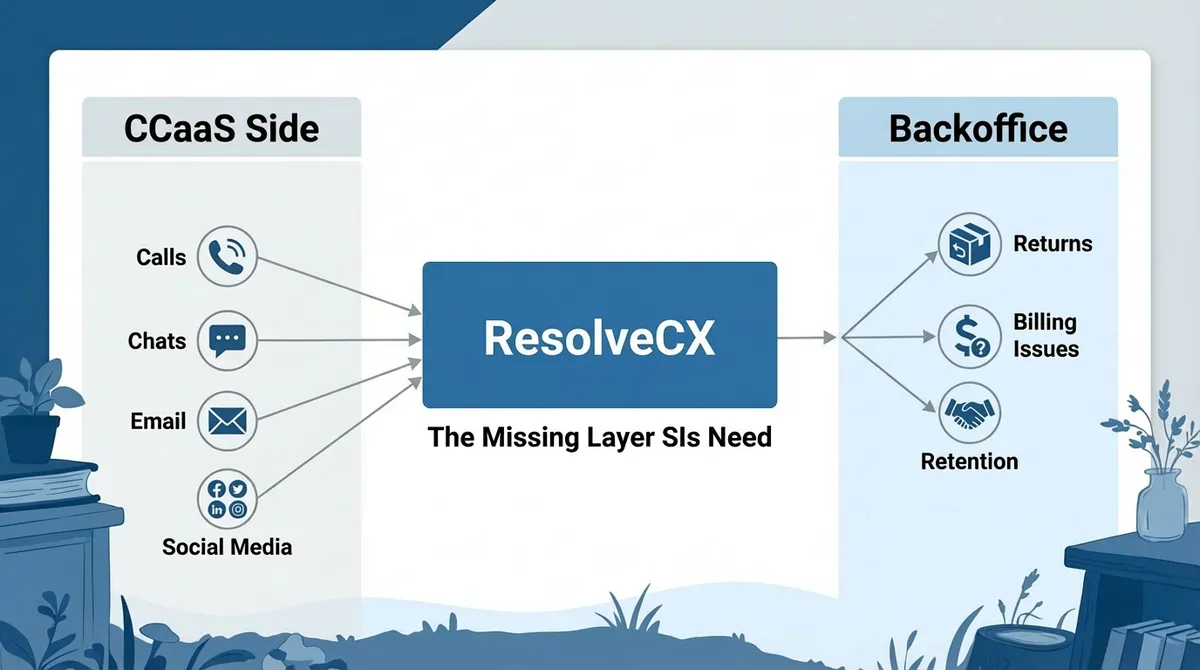 Guide
GuideThe discipline of investigating root causes behind recurring incidents and complaints, not just closing the surface issue. How structured problem management eliminates the failures that generate repeat harm.
Explore resource Blog
BlogPractical thinking on complaint governance, escalation management, and case resolution for regulated industries.
Explore article Video
VideoSee complaint governance, case management, and escalation workflows explained by the ResolveCX team.
Explore video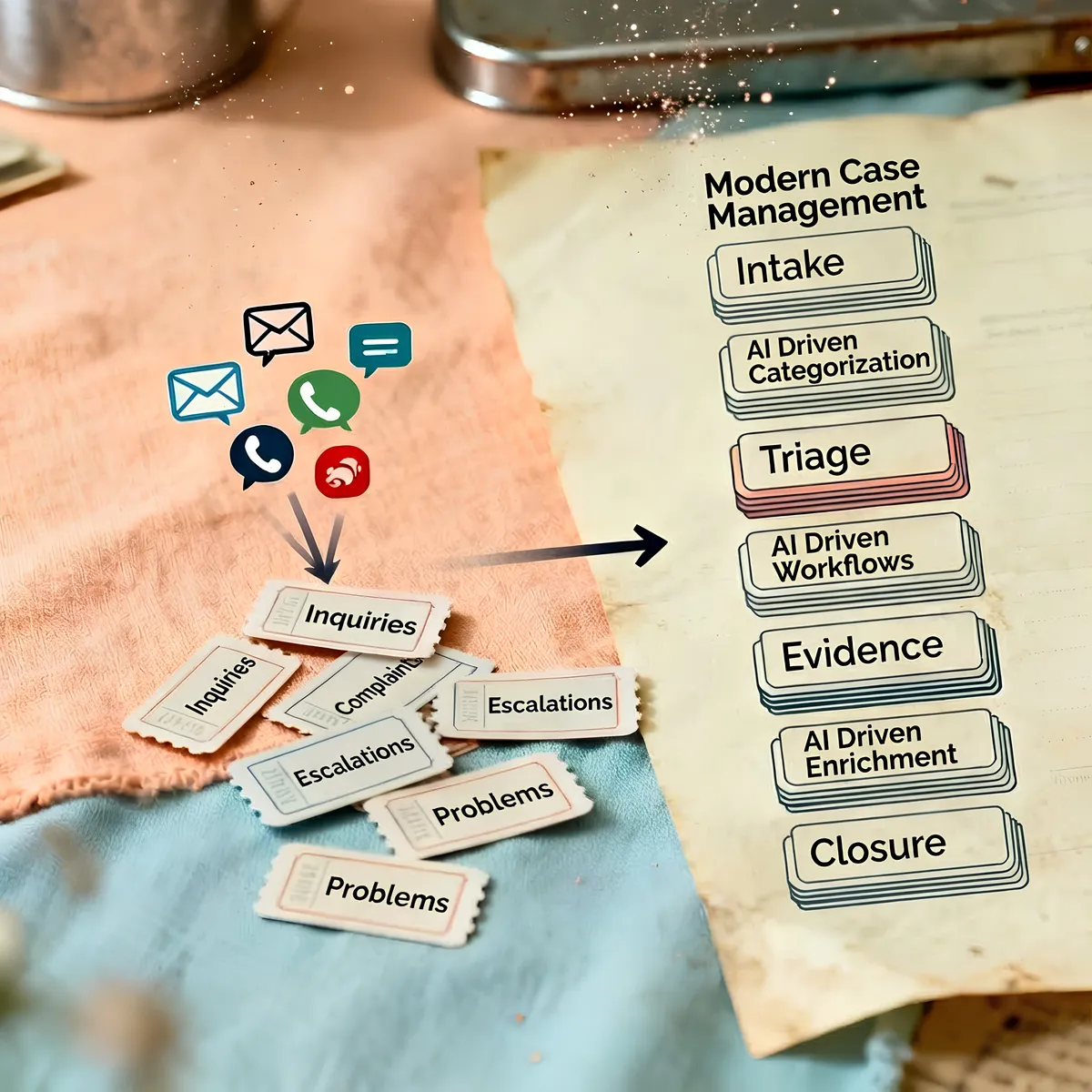 Case study
See how regulated healthcare teams improved SLA adherence, reduced escalations, and accelerated audit preparation.
Explore resourceFollow the latest ResolveCX updates, governance conversations, and practical customer operations insights.
Explore resourceWe use cookies to operate the site, prevent bots, and, with your consent, understand usage patterns. Cookie Policy · Privacy Policy