
ResolveCX Intelligence
AI Complaint Management Software for Your Team
ResolveCX Intelligence is ResolveCX's AI assistance for complaint teams. It helps prepare categories, context and handoff drafts from available case information so handlers have a starting point for review. Your configured process defines the sources and handling rules; people check suggestions and decide what happens next. Business-owned knowledge also supports website FAQs and automatic resolution of simple cases, while complex, uncertain and specialist matters stay with people.
7
Capabilities to explore
Human
Review of AI suggestions
One
Governed case record
Your rules
Configure handling and escalation
7 AI capabilities
Seven Capabilities for Governed Case Work
Choose the capabilities and sources that fit your process. AI complaint management software supports the review work around a complaint, not a final judgement about it. Handlers verify suggestions against available case context and retain responsibility for decisions on matters requiring human handling. Knowledge can also support customer FAQ self-service and simple-case auto-resolution.
Sentiment-Based Routing
Add context to routing decisions
Sentiment signals from supported contact content can help flag contacts for review alongside category and case history. People validate sensitive or uncertain signals before deciding how to handle the case.
Give handlers more context for prioritisation and escalation.
AI Classification
Classify, route or escalate inbound work
AI helps classify inbound cases, complaints and inquiries from available content. Identified categories can route work to the right team or trigger immediate escalation under configured rules, with teams reviewing exceptions.
Connect classification to team routing and escalation while people remain accountable for case decisions.
Intelligent Segmentation
Different customers, different handling paths
Configured account data and contact signals can surface possible vulnerability, priority or risk for a handler to assess before applying the appropriate handling path.
Support specialist review without treating an inferred segment as a final decision.
Omnichannel Unified Inbox
Connected channels, one case view
Bring contacts from connected channels into a governed case timeline. Agents can check and link related records when matches are uncertain.
Make available interaction history easier to review in one place.
Knowledge Base AI Copilot
Business knowledge for three resolution paths
Businesses build content in the ResolveCX Knowledgebase module, publish it as FAQs on their own websites and make it available for AI ingestion. Knowledge supports staff-assisted resolution, customer FAQ self-service and automatic resolution of simple cases.
Help staff resolve faster, respond consistently, reduce policy-related mistakes and onboard sooner. People handle complex, uncertain and specialist matters.
AI Case Summarization
Draft context for handoffs
Create a draft summary from available case history for a handler to check and amend before relying on it at a handoff.
Help receiving teams orient themselves without replacing review of the case record.
Customer Churn Prediction
Review potential retention signals
Use configured case and account signals to flag potential relationship risk for a person to assess before outreach or other action.
Give retention teams a starting point, not a prediction of an individual's decision.
The complete system
Connected Context, Human Decisions
Where configured, case context can inform suggested categories and handoff drafts. Teams agree the permitted inputs and reviewer roles, then validate suggestions against the source record. An unsuitable suggestion can be changed or discarded; sensitive cases require the appropriate specialist. Business-owned knowledge supports staff assistance, website FAQ self-service and simple-case auto-resolution; complex, uncertain and specialist matters require human handling.
- SOURCEAuthorized sources selected for your workflow
- AI MAY SUGGESTPossible category, cue or draft
- PERSON REVIEWSHandler verifies the suggestion against its source
- PERSON DECIDESPerson decides the next configured action
Inputs and handling depend on configuration. Knowledge also supports website FAQs, staff assistance and simple-case auto-resolution; complex, uncertain and specialist matters stay with people. Illustrative only; availability depends on configuration.
Contact Arrives
Available contact content and account context can inform suggested categories and signals where configured. A handler checks the source before confirming a category or using a signal.
Case Record Reviewed
Contacts from connected channels can be linked to a governed case record. An agent checks uncertain matches and the available history.
Knowledge Supports Resolution
Business-owned knowledge supports website FAQ self-service, staff assistance and simple-case auto-resolution. Case workers assess guidance for individual circumstances; complex, uncertain and specialist matters stay with people.
Case Moves Between Teams
A draft handoff summary can help the receiving handler review the source record and confirm key facts.
Next Action Confirmed
Teams assess potential relationship-risk signals and decide whether outreach or another action is appropriate.
Why it matters
AI Assistance and Configured Rules
Configured rules provide a clear handling framework. AI can add suggestions from available context; people validate those suggestions before sensitive routing or customer actions.
| Capability | ResolveCX Intelligence | Configured Rules Alone |
|---|---|---|
| Suggested sentiment signal for human review | ||
| Suggested complaint category for human review | ||
| Potential relationship-risk signals for review | ||
| Draft case summaries for human verification | ||
| Business-owned knowledge for staff assistance and simple-case auto-resolution | ||
| Configured handling rules and human oversight | ||
| Specialist review for sensitive cases |
Industry coverage
ResolveCX Intelligence Is Contextual to Your Industry
Teams can configure categories and handling rules, and build their own Knowledgebase content to reflect their operations. Validate AI suggestions and regulatory requirements with your own specialists.
Telecoms
Configure billing dispute categories and review potential escalation signals against your Ofcom processes.
Financial Services
Surface possible vulnerability indicators for specialist review under your own complaint policies.
Healthcare
Support review of case context and draft handoffs; qualified staff make clinical and regulatory decisions.
BPO & Contact Centers
Configure client-specific handling rules and check draft summaries at team handoffs.
SaaS & Technology
Review incident-related case patterns and draft summaries with account teams.
Manufacturing
Organise quality complaint context and draft handoff notes for team review.
Evaluating ResolveCX Intelligence
It adds AI assistance to the complaint workflow: suggested categories, context signals and draft summaries for handlers to review during triage and handoffs. Businesses also build content in the ResolveCX Knowledgebase module, publish it as FAQs on their own websites and make it available for AI ingestion. Knowledge supports staff-assisted resolution, customer FAQ self-service and automatic resolution of simple cases. Complex, uncertain and specialist matters stay with people.
A suggestion is material to review, not a final finding. For matters requiring human handling, the handler checks the original information, changes or discards unsuitable suggestions and applies the organisation's policies. Knowledge can support automatic resolution of simple cases, but complex, uncertain and specialist matters need people. This does not make sentiment cues, summaries or risk signals final decisions.
Agree which capabilities to enable, what case information they may use and who reviews their output. Available channels depend on connected systems and permissions; businesses build their knowledge in the ResolveCX Knowledgebase module for website FAQs and AI ingestion. Confirm access, retention and evidence requirements with your security and privacy stakeholders rather than assuming a particular control is included.
Start with representative complaints and a clearly defined review process. Ask to examine a category suggestion, its source, a correction and the resulting handling path. Include ambiguous and sensitive cases, check connected-source availability and agree evaluation criteria with operations and specialist reviewers. No universal accuracy or time-saving figure is claimed.
No. Rules define agreed handling conditions; AI can contribute suggestions from available context. Teams decide how the two work together and who can authorise the next action. Both approaches still need human oversight and specialist review where the case requires it.
Practical evaluation guide
How to evaluate AI complaint management for your team
Start with the work a handler needs to review. Choose a representative complaint, identify the authorised information available and agree which suggestion would help a person make the next decision. Evaluate knowledge separately across staff assistance, website FAQ self-service and simple-case auto-resolution, keeping complex, uncertain and specialist matters with people.
Illustrative review scenario
Evaluate the handoff, not just the generated answer
Consider a billing complaint that includes an earlier contact and a disputed explanation. A useful evaluation follows the original complaint through category review, any relevant knowledge and the briefing for the next owner. Check whether a reviewer can distinguish what the customer reported from what the available record supports. A fluent summary does not establish the facts or decide the outcome.
Questions to agree before use
- Which sources are connected and authorised for the agreed workflow?
- Who checks a suggestion and decides whether to use it?
- What happens when the source is incomplete or the suggestion is wrong?
- Which sensitive decisions require a qualified specialist?
Assess AI assistance alongside complaint ownership, investigation and escalation. The surrounding process determines who acts on reviewed information; a suggestion is not a replacement for that process.
ResolveCX AI
Explore AI Assistance With Human Oversight
Bring your complaint examples and review requirements. Explore selected capabilities, available sources and handling rules, including how a person checks a suggestion and chooses the next action.
Keep exploring
Recommended insights
Relevant guides and real-world perspectives for the work you are doing now.
 Guide
GuideNICE CXone Integration
CXone Studio IVR script-triggered case creation following DEVone API patterns, NICE Enlighten AI classification, embedded CXone agent desktop panel, and bi-directional sync to CXone supervisor dashboards.
Explore resource Guide
GuideCustomer Churn Prediction for Financial Services
AI churn risk scoring that identifies post-complaint attrition signals before customers close accounts, with retention workflows and Consumer Duty outcome evidence.
Explore resource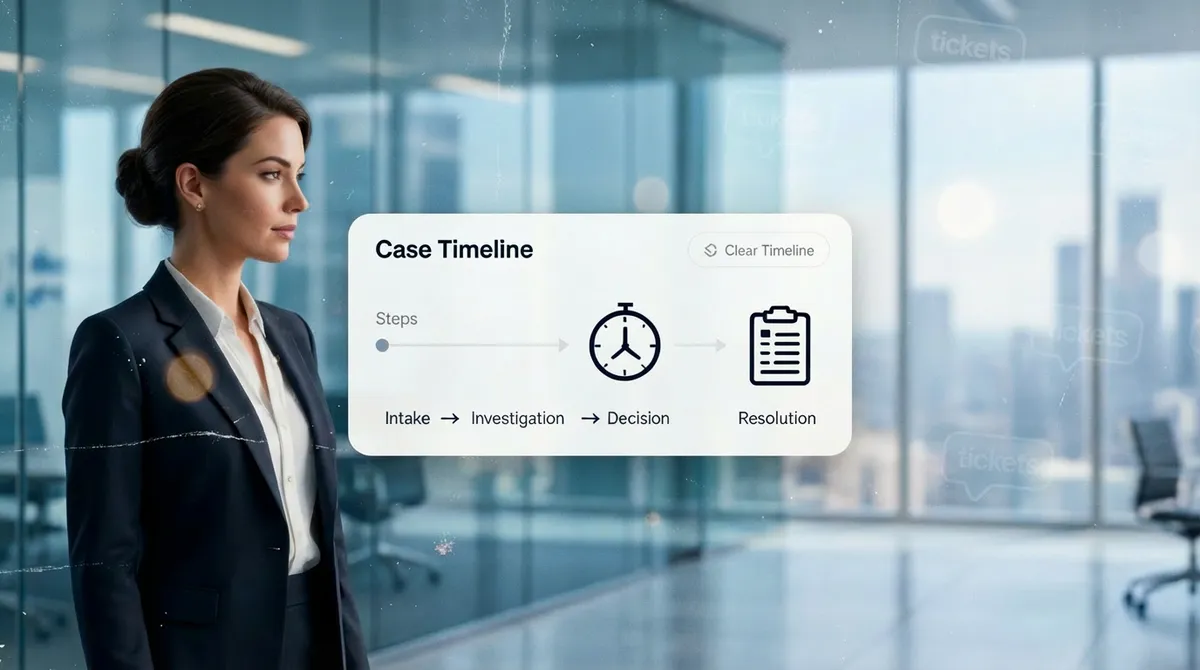 Guide
GuideWhat Is Case Management?
What a case is, how it differs from a ticket, and why case-first architecture matters in regulated environments where resolution memory, ownership, and audit trails are non-negotiable.
Explore resource Guide
GuideCisco Webex Contact Center Integration
API-based case creation from Webex Connect IVR events, agent screen pop via the Webex CC Desktop Widget SDK, case management layer behind the Webex CC agent desktop, and bi-directional status sync to Webex Analyzer dashboards where configured.
Explore resource Blog
BlogThe ResolveCX Blog
Practical thinking on complaint governance, escalation management, and case resolution for regulated industries.
Explore articleVideoResolveCX Video Library
See complaint governance, case management, and escalation workflows explained by the ResolveCX team.
Explore video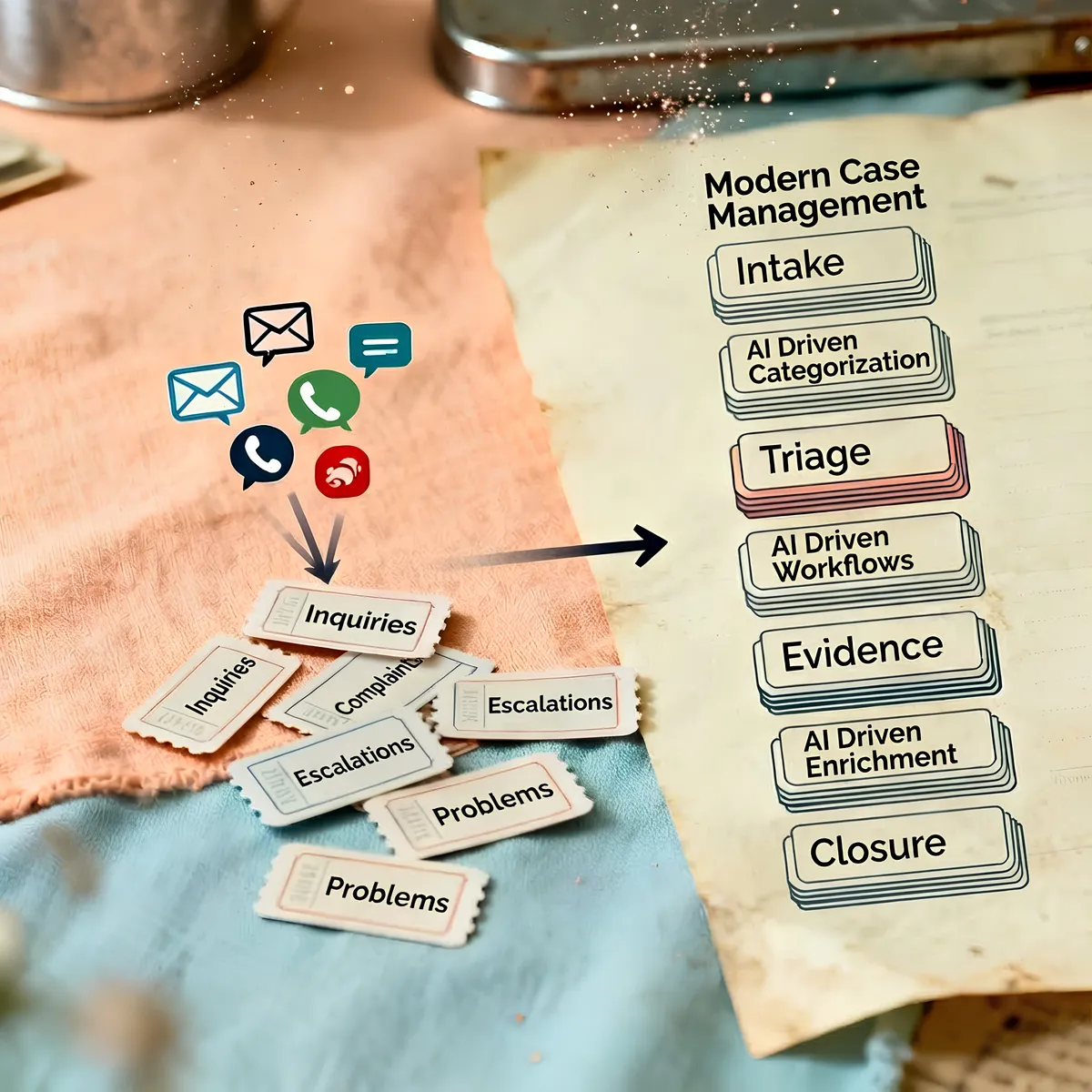 Case study
Healthcare Governance Case Studies
See how regulated healthcare teams improved SLA adherence, reduced escalations, and accelerated audit preparation.
Explore resourceResolveCX on LinkedIn
Follow the latest ResolveCX updates, governance conversations, and practical customer operations insights.
Explore resource